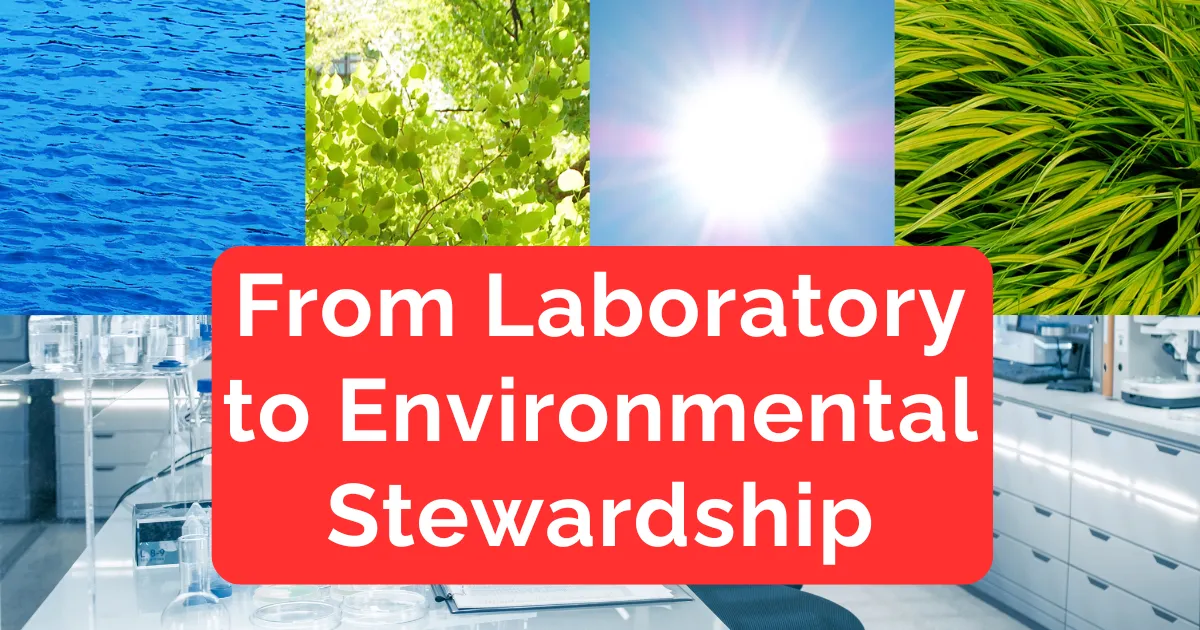

“From backyard microscopes to hospital laboratories, every mystery I’ve explored has led to one inescapable truth: the health of our environment is inseparable from our own. This realization didn’t just change my career—it sparked a mission to revolutionize how we heal both people and the planet. Here’s how curiosity became action, and action became a movement.”
Anna Jacobs

Anna Jacobs
Scientific Mindset
As a child, I was always drawn to the mysteries of the natural world. My curiosity wasn’t just casual interest—it was an insatiable desire to understand the why, what, and how of everything around me. I would spend hours examining leaves under my first microscope, cataloging the insects in our backyard, and conducting simple experiments with household materials. This wasn’t just play; it was the foundation of my scientific mindset.
During my first dual degree in Microbiology and Botany, I immersed myself in understanding the intricate relationships between plants, microorganisms, and their environments. Laboratory experimentation became my second home. I learned how fungi form symbiotic relationships with plant roots, how bacteria break down complex organic matter in soil, and how plants sequester carbon through biosynthesis. These weren’t just academic concepts—they were revelations about how our world maintains its delicate balance.
After completing my first degrees, I pursued Clinical Laboratory Science, eventually passing the American Society for Clinical Pathology Board exam to become licensed. Working as a generalist, I rotated through hematology, chemistry, microbiology, blood bank, urinalysis, immunology, molecular diagnostics, and serology. I assisted with bone marrow biopsies and worked alongside pathologists during autopsies and tissue examinations. The laboratory became my window into human health.
Links Between the Environmental & Human Health
What struck me most during those years was the connection between environmental factors and human illness. I saw patients of all ages suffering from conditions linked to environmental contaminants—respiratory illnesses from air pollution, complications from waterborne pathogens, and suspected links between chemical exposures and certain cancers. These weren’t just data points; they were people whose lives had been altered by our collective impact on the environment.
This firsthand exposure to environmental health impacts motivated me to take action at St. John Hospital, where I worked for twenty-one years. The connection between our medical practices and environmental sustainability became impossible to ignore.
During my time at St. John Hospital, I couldn’t remain passive. I initiated a sustainability committee that revolutionized our waste management protocols, reducing biohazardous waste by implementing better sorting systems. We reduced energy consumption by 27% through strategic equipment management and upgraded to water-efficient fixtures that saved millions of gallons annually. The hospital became a model for healthcare sustainability in our region.
But I knew my impact could be greater. The connection between environmental health and human health wasn’t just theoretical—I had seen it firsthand from both sides: in the growth patterns of plants and microbes, and the blood and tissues of patients.
A Personal Mission Becomes a Movement
The planet—our Earth—and what we breathe and eat isn’t just important to me professionally; it’s personal. When I look at my children, I see the future stewards of this planet, and I’m determined to leave them a world that’s cleaner than the one I inherited.
At Dynamic Carbon Credits, we’re not just offering environmental services; we’re building a community committed to measurable change. We approach each emission reduction project with scientific rigor and transparent accounting. Whether partnering with industrial facilities to capture methane, helping farms implement regenerative practices, or restoring natural carbon sinks, we’re tackling climate change one molecule at a time.
The Science Behind Our Solution
Pharmaceuticals
Heavy Metals
Microplastics” _builder_version=”4.27.4″ _module_preset=”default” global_colors_info=”{}” theme_builder_area=”post_content”][/dvmd_table_maker_item][dvmd_table_maker_item col_label=”Standard Treatment Results” col_content=”Standard Treatment Results
Typical removal to 15-20mg/L
Industry standard: 3-5ppm remaining
Conventional filtration: 100-200 particles/L ” _builder_version=”4.27.4″ _module_preset=”default” global_colors_info=”{}” theme_builder_area=”post_content”][/dvmd_table_maker_item][dvmd_table_maker_item col_label=”Treatment Results” col_content=”Treatment Results
0.75mg/L (from 250mg/L)
0.045ppm (from 15ppm)
1.5 particles/L (from 500 particles/L)” _builder_version=”4.27.4″ _module_preset=”default” global_colors_info=”{}” theme_builder_area=”post_content”][/dvmd_table_maker_item][dvmd_table_maker_item col_label=”Improvement” col_content=”Improvement
99.7% efficiency
99.7% efficiency
99.7% efficiency” _builder_version=”4.27.4″ _module_preset=”default” global_colors_info=”{}” theme_builder_area=”post_content”][/dvmd_table_maker_item][/dvmd_table_maker][dvmd_table_maker tbl_title_mode=”on” tbl_title_text=”Carbon Sequestration in Michigan’s Ecosystems” tbl_description_mode=”on” tbl_description_text=”Our research compares standard carbon sequestration rates with enhanced outcomes using DCC methodologies:” tbl_description_position=”above” tbl_top_left_mode=”on” tbl_top_left_style=”rhead” tbl_responsive_breakpoint=”max_width_767″ tbl_responsive_break_by=”row” tbl_frame_type=”lines” tbl_chead_cell_color=”#3C4142″ _builder_version=”4.27.4″ _module_preset=”default” tbl_title_level=”h4″ tbl_title_font_size=”22px” tbl_tcell_text_font_size=”15px” tbl_tcell_text_line_height=”1.5em” tbl_chead_text_font=”|700|on||||||” tbl_chead_text_text_color=”#F5F5F5″ tbl_chead_text_font_size=”16px” tbl_rhead_text_font=”|700|||||||” tbl_rhead_text_text_color=”#F5F5F5″ tbl_rhead_text_font_size=”17px” background_color=”#FFFFFF” custom_padding=”20px|40px|30px|40px|false|true” tbl_chead_text_font_size_tablet=”15px” tbl_chead_text_font_size_phone=”12px” tbl_chead_text_font_size_last_edited=”off|phone” tbl_rhead_text_font_size_tablet=”15px” tbl_rhead_text_font_size_phone=”13px” tbl_rhead_text_font_size_last_edited=”off|phone” border_width_all=”1px” locked=”off” global_colors_info=”{}” theme_builder_area=”post_content”][dvmd_table_maker_item col_label=”Contaminant Type” col_content=”Ecosystem Type
Forest
Wetlands
Prairie Systems” _builder_version=”4.27.4″ _module_preset=”default” global_colors_info=”{}” theme_builder_area=”post_content”][/dvmd_table_maker_item][dvmd_table_maker_item col_label=”Typical CO2 Sequestration” col_content=”Typical CO2 Sequestration
2.3 tons CO2/acre/lifecycle
5.2 tons CO2/acre/lifecycle
1.5 tons CO2/acre/lifecycle ” _builder_version=”4.27.4″ _module_preset=”default” global_colors_info=”{}” theme_builder_area=”post_content”][/dvmd_table_maker_item][dvmd_table_maker_item col_label=”DCC Enhanced Sequestration” col_content=”DCC Enhanced Sequestration
5.7 tons CO2/acre/lifecycle
13 tons CO2/acre/lifecycle
3.6 tons CO2/acre/lifecycle” _builder_version=”4.27.4″ _module_preset=”default” global_colors_info=”{}” theme_builder_area=”post_content”][/dvmd_table_maker_item][dvmd_table_maker_item col_label=”Improvement” col_content=”Improvement
148% efficiency
150% efficiency
140% efficiency” _builder_version=”4.27.4″ _module_preset=”default” global_colors_info=”{}” theme_builder_area=”post_content”][/dvmd_table_maker_item][/dvmd_table_maker]
DCC Integrated Systems – 50 tons CO2 / acre / lifecycle Revolutionary approach
Metric” _builder_version=”4.27.4″ _module_preset=”default” global_colors_info=”{}” theme_builder_area=”post_content”][/dvmd_table_maker_item][dvmd_table_maker_item col_label=”Typical CO2 Sequestration” col_content=”Standard Emissions
1 ton CH4 = 28 tons CO2e” _builder_version=”4.27.4″ _module_preset=”default” global_colors_info=”{}” theme_builder_area=”post_content”][/dvmd_table_maker_item][dvmd_table_maker_item col_label=”DCC Enhanced Sequestration” col_content=”DCC Enhanced Sequestration
Processing to 2.52 tons CO2e” _builder_version=”4.27.4″ _module_preset=”default” global_colors_info=”{}” theme_builder_area=”post_content”][/dvmd_table_maker_item][dvmd_table_maker_item col_label=”Improvement” col_content=”Improvement
91% Reduction” _builder_version=”4.27.4″ _module_preset=”default” global_colors_info=”{}” theme_builder_area=”post_content”][/dvmd_table_maker_item][/dvmd_table_maker][dvmd_table_maker tbl_title_mode=”on” tbl_title_text=”Agricultural Nitrous Oxide Reduction” tbl_description_mode=”on” tbl_description_text=”DCC’s agricultural practices dramatically reduce N2O emissions:” tbl_description_position=”above” tbl_top_left_mode=”on” tbl_top_left_style=”rhead” tbl_responsive_breakpoint=”max_width_767″ tbl_responsive_break_by=”row” tbl_frame_type=”lines” tbl_chead_cell_color=”#3C4142″ _builder_version=”4.27.4″ _module_preset=”default” tbl_title_level=”h4″ tbl_title_font_size=”22px” tbl_tcell_text_font_size=”15px” tbl_tcell_text_line_height=”1.5em” tbl_chead_text_font=”|700|on||||||” tbl_chead_text_text_color=”#F5F5F5″ tbl_chead_text_font_size=”16px” tbl_rhead_text_font=”|700|||||||” tbl_rhead_text_text_color=”#F5F5F5″ tbl_rhead_text_font_size=”17px” background_color=”#FFFFFF” custom_padding=”20px|40px|30px|40px|false|true” tbl_chead_text_font_size_tablet=”15px” tbl_chead_text_font_size_phone=”12px” tbl_chead_text_font_size_last_edited=”off|phone” tbl_rhead_text_font_size_tablet=”15px” tbl_rhead_text_font_size_phone=”13px” tbl_rhead_text_font_size_last_edited=”off|phone” border_width_all=”1px” locked=”off” global_colors_info=”{}” theme_builder_area=”post_content”][dvmd_table_maker_item col_label=”Methane Mitigation” col_content=”Measurement
N2O Emissions” _builder_version=”4.27.4″ _module_preset=”default” global_colors_info=”{}” theme_builder_area=”post_content”][/dvmd_table_maker_item][dvmd_table_maker_item col_label=”Typical CO2 Sequestration” col_content=”Conventional Agriculture
1.8 kg N2O/acre/year (537 kg CO2e)” _builder_version=”4.27.4″ _module_preset=”default” global_colors_info=”{}” theme_builder_area=”post_content”][/dvmd_table_maker_item][dvmd_table_maker_item col_label=”DCC Agricultural Methods” col_content=”DCC Agricultural Methods
0.25 kg N2O/acre/year (75 kg CO2e)” _builder_version=”4.27.4″ _module_preset=”default” global_colors_info=”{}” theme_builder_area=”post_content”][/dvmd_table_maker_item][dvmd_table_maker_item col_label=”Improvement” col_content=”Improvement
86% Reduction” _builder_version=”4.27.4″ _module_preset=”default” global_colors_info=”{}” theme_builder_area=”post_content”][/dvmd_table_maker_item][/dvmd_table_maker]
Looking Forward
I hope you’ll join us on this journey—a story that future generations will tell about how ordinary people came together to address the greatest challenge of our time. At Dynamic Carbon Credits, we’re ready to be the solution for your company or farm. Together, we can transform environmental challenges into opportunities for healing our planet.
Join us today at www.dynamiccarboncredits.com—let us be the solution for your company or farm. Together, we can make a difference that lasts for generations.